
Can dancing actually lift your mood? What the research says, without the miracle-cure nonsense
Dance is one form of physical activity that may support mood and mental wellbeing for some people. Reviews of controlled studies suggest possible benefits for depressive symptoms, anxiety and stress, but study quality and dance styles vary. Dancing can be useful alongside other support, not a guaranteed treatment or a substitute for mental health care.
Published by Vibe Dance Fitness
Editorial note: Vibe uses AI-assisted tools when preparing articles. Individual author and reviewer names appear only when their contributions have been confirmed. About Vibe’s publishing process.
Can dancing help your mood and mental wellbeing?
Dance is being studied as one possible way to support mental wellbeing, rather than as a cure for mental illness. Reviews of randomised studies report promising results for some outcomes, including depressive symptoms, but the certainty and consistency of those findings differ. In practice, a dance session combines physical movement with music, attention and sometimes social interaction. Each ingredient may affect the experience, and different people respond differently. NHS guidance recommends physical activity as one option for supporting mood and wellbeing, while acknowledging that starting can be difficult. A person experiencing depression or anxiety does not need to force themselves through an uncomfortable group class to benefit from movement. They might prefer an at-home routine, a brief session or a lower-impact version. Clinical support, medication and other treatments still matter where appropriate. The reasonable claim is that dance can help some people feel better, not that dancing fixes a mental health condition.
Guidance behind this topic
These primary guidance pages cover the wider subject. They are not substitutes for the studies cited in this article.
There is a particular kind of claim that follows fitness around: do this one thing and your brain will become a sunlit meadow by Tuesday. Mental health is not that tidy. Dance can help, but it is not therapy in a glittery top.
The evidence is promising
A 2021 meta-analysis of 28 randomised controlled trials found dance interventions were associated with reductions in symptoms of depression, anxiety and stress. The authors also rated the certainty of the evidence from very low to low, which is an important bit of the abstract that marketing departments sometimes accidentally leave on the floor.
A newer 2026 meta-analysis looked at dance movement therapy and other dance-based approaches across 19 randomised trials. It also reported reductions in depressive symptoms. That adds to the picture, but it still does not mean every kind of dance will work equally well for every person.
Why might dance feel different from a generic workout?
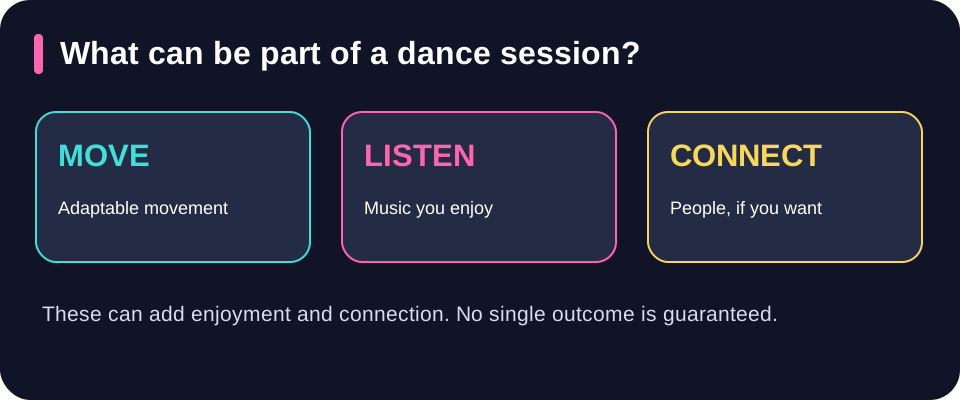
Dance bundles several things together: physical activity, music, attention, learning, rhythm and often other people. Any one of those could contribute to how you feel during or after a session.
The NHS Every Mind Matters guidance describes physical activity as a natural mood booster and notes benefits including reduced tension, stress and anxiety, better sleep, improved confidence and more energy. It also encourages people to move at their own pace and choose activities they enjoy.
There is a difference between “helps” and “treats”
If movement improves your mood after a difficult day, that is valuable. If a regular class gives your week structure and connection, that is valuable too. But persistent depression, anxiety or other mental health problems deserve proper support. A dance class can sit alongside treatment, community support, medication or talking therapy where appropriate.
The useful claim is not “dance fixes mental health”. It is “dance can be one genuinely helpful ingredient in a much bigger recipe”.
What if exercise makes you feel worse?
Mind points out that physical activity is not uncomplicated for everyone. Cost, stigma, health conditions, body image, past experiences and inaccessible spaces can all make movement harder. Some people can also develop unhealthy relationships with exercise.
That is one reason Vibe avoids calorie-burn language, punishment and public comparison. The aim is to build a relationship with movement you can live with, not another stick to hit yourself with.
- Dance may support mood and reduce symptoms of stress, anxiety and depression, but evidence quality varies.
- Physical activity, music, mastery and social connection may all contribute.
- Dance is not a replacement for mental health treatment when treatment is needed.
- A supportive, non-shaming environment matters.
Sources and further reading
We link the evidence so you can read beyond our summary. Research quality varies, and an association is not automatically proof of cause.
2026 meta-analysis: dance-related interventions and depressive symptoms
Meta-analysis of 19 randomised controlled trials published between 2014 and 2024.
2021 meta-analysis: dance, depression, anxiety and stress
Reported benefits across 28 trials, while rating the certainty of evidence from very low to low.
NHS Every Mind Matters: Be active for your mental health
Practical NHS guidance on physical activity, mood, stress, confidence and social connection.
Mind: How physical activity and mental health are connected
A nuanced guide that includes potential benefits as well as barriers and situations where exercise may not help.
Want to know more about the people behind Vibe? Meet founder Matt Campbell.
Editorial transparency: Vibe uses AI-assisted tools during editorial preparation. These articles are published under the Vibe Dance Fitness name until individual writer and reviewer credits have been confirmed. We link supporting research where available; please check the original guidance when making decisions about your health.
Try it your way
Movement can be part of your wellbeing toolkit.
Come for the music, adapt what you need and leave the pressure at the door.
See upcoming classes