Dancing is physical activity, and it can count as moderate exercise when it raises your breathing and heart rate. Short or gentle sessions are useful too. UK adult guidance recommends working towards 150 minutes of moderate activity a week or 75 minutes of vigorous activity, plus strengthening on two days.
Prepared by Vibe Dance Fitness using AI-assisted editorial tools. Named authors and reviewers are only credited when their involvement is confirmed. About our publishing process.
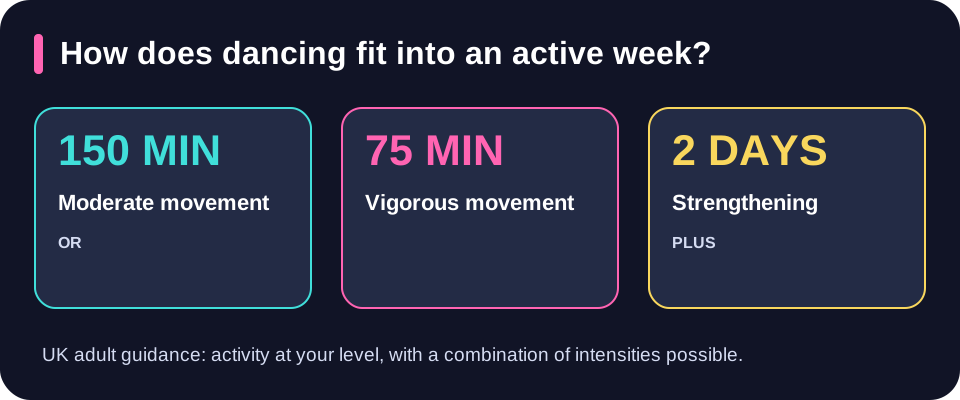
A visual summary of general UK adult physical activity guidance. It is a goal to work towards, not a rule for every body or every session.
Does dancing and gentle movement count as exercise?
Dance fitness is one way of being active, whether someone joins a class or moves at home. Current UK Chief Medical Officers guidance recommends adults aim for at least 150 minutes of moderate-intensity activity each week, or 75 minutes of vigorous activity, alongside muscle-strengthening activities on two days. Those numbers are goals to work towards, not the price of admission to moving. A dance routine may contribute to aerobic activity when it increases your breathing and heart rate. Slower steps, seated adaptations and short sessions can still offer useful movement, particularly for someone building confidence or returning after a break. A class does not automatically include all the strengthening work that guidance recommends, and people with long-term health conditions may need individual adaptations. The linked articles explain how to understand intensity, why music changes the experience, and what research can and cannot establish about dancing and health.
Dancing is explicitly recognised as physical activity in NHS and UK guidance. Here’s how to think about intensity, minutes and why a class does not have to feel brutal to count.
The latest UK guidance is unusually clear: every minute counts. Smaller moves, shorter sessions and lower-impact options are not failed versions of exercise.
Dance combines movement, memory, rhythm and coordination. Reviews suggest potential benefits for cognition in older adults, but the details are more interesting than a headline.