
Is dancing good for your heart? A useful answer with fewer dramatic headlines
Dancing is a form of aerobic activity when it raises your heart rate and breathing. It can support cardiovascular fitness, depending on intensity, duration and consistency. NHS guidance lists dancing as an example of moderate activity. Research is encouraging, but dance does not guarantee protection against heart disease or replace medical advice.
Published by Vibe Dance Fitness
Editorial note: Vibe uses AI-assisted tools when preparing articles. Individual author and reviewer names appear only when their contributions have been confirmed. About Vibe’s publishing process.
Is dancing good for your heart?
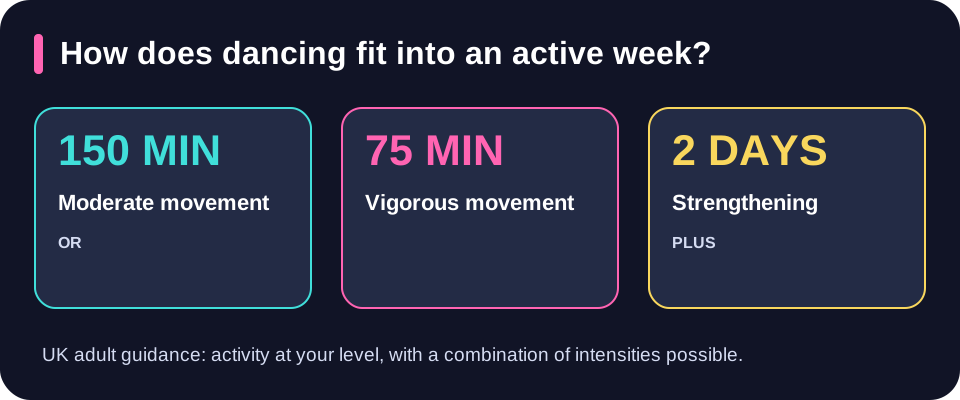
Dance can contribute to aerobic physical activity, which supports cardiovascular health when practised at a suitable intensity. For most adults, UK guidance recommends 150 minutes of moderate-intensity activity a week or 75 minutes of vigorous activity, alongside strength work. An energetic dance session may contribute to those minutes if breathing and heart rate increase enough. A gentler session may still offer movement and enjoyment, even when it falls below moderate intensity. People differ in fitness, health conditions, mobility and medication, so the same routine may feel easy to one person and demanding to another. Observational research on dance and heart outcomes can suggest links but cannot prove that dancing itself caused the benefit. NHS advice and guidance from the British Heart Foundation are useful starting points for understanding how activity fits into heart health. Anyone with symptoms or a condition affecting exercise should follow appropriate clinical advice and adapt or stop when needed.
Guidance behind this topic
These primary guidance pages cover the wider subject. They are not substitutes for the studies cited in this article.
Dancing can make your heart work harder. That part is not controversial. The interesting question is what we can say about heart health without converting every study into a promise.
Dance can be aerobic activity
The NHS lists dancing as an example of moderate-intensity activity when it raises your heart rate, makes you breathe faster and feel warmer. At higher intensity, some dance sessions may cross into vigorous activity.
Regular physical activity is associated with substantial cardiovascular benefits across the wider evidence base. UK guidance recommends at least 150 minutes of moderate activity a week or 75 minutes of vigorous activity, alongside strength work.
What about research specifically on dancing?
The British Heart Foundation has highlighted observational research pooling data from around 48,000 people in Britain, which found moderate-intensity dancing was associated with lower cardiovascular mortality compared with rarely or never dancing.
Association is the important word. Observational studies can identify patterns, but people who dance may differ from non-dancers in other ways too. That means we should resist translating one result into “dancing cuts your heart risk by X per cent”.
The stronger claim is simpler
Dance can be a form of aerobic physical activity. Aerobic activity can support cardiovascular fitness. If dance is the activity you are more likely to do consistently, that is practically important.
The heart does not award bonus points because your cardio happened on a machine with a digital calorie counter.
Know when general guidance is not enough
If you have a heart condition, symptoms, recent surgery or another health concern, generic fitness content is not personalised medical advice. NHS exercise resources advise seeking professional guidance when you are unsure whether an exercise is appropriate for your current health.
For everyone else, the most useful place to start is usually modestly: move, notice how your body responds and build gradually.

- Dance can count as aerobic physical activity.
- Regular aerobic activity supports cardiovascular health.
- Observational dance studies are interesting but do not prove a guaranteed risk reduction.
- People with relevant health concerns should use personalised clinical advice.
Sources and further reading
We link the evidence so you can read beyond our summary. Research quality varies, and an association is not automatically proof of cause.
NHS Better Health: How to be more active
Lists dancing as a moderate-intensity activity when it raises heart rate and breathing.
British Heart Foundation: 6 reasons to dance your way to health
Consumer article discussing dance accessibility and observational cardiovascular research.
UK Chief Medical Officers’ physical activity guidelines
Official guidance on moderate and vigorous physical activity for general health.
Want to know more about the people behind Vibe? Meet founder Matt Campbell.
Editorial transparency: Vibe uses AI-assisted tools during editorial preparation. These articles are published under the Vibe Dance Fitness name until individual writer and reviewer credits have been confirmed. We link supporting research where available; please check the original guidance when making decisions about your health.
Try it your way
Cardio can have a chorus.
Try a class, choose your intensity and build gradually.
Find a class