
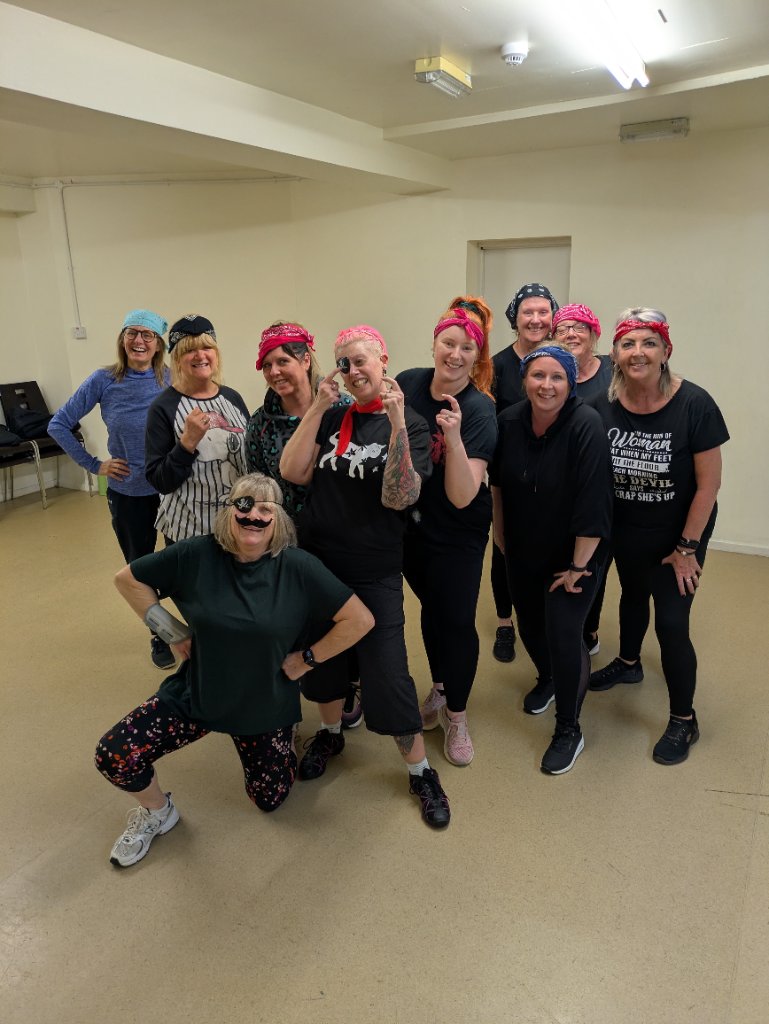
Dance, ageing and the brain: what do we actually know?
Dance is an activity that combines movement, rhythm, coordination and remembering sequences. It may support aspects of cognition and balance in older adults. Reviews of trials report promising results, though effects differ across programmes and participants. The evidence does not mean dancing prevents dementia or guarantees improved thinking for any individual.
Published by Vibe Dance Fitness
Editorial note: Vibe uses AI-assisted tools when preparing articles. Individual author and reviewer names appear only when their contributions have been confirmed. About Vibe’s publishing process.
Can dancing support thinking and balance as we age?
Dance may be a useful physical and cognitive activity for older adults, especially when the class is designed around their abilities and safety. A 2021 systematic review brought together 11 randomised trials examining dance and cognitive function in older people. Other reviews have looked at balance, mobility and endurance, with findings that vary across the studies and dance programmes. These results cannot establish that dance prevents dementia or that one style works for everybody. A routine might ask participants to remember a sequence, shift their weight, move to a beat and respond to other people. Those are meaningful activities in their own right. For someone at risk of falls, the right programme may involve a stable chair, clear instructions or support from a trained professional. For anyone living with a long-term condition, suitable pacing and medical advice where needed are more important than mastering complicated choreography. Dance can be adapted, and enjoyment is a valid outcome.
Guidance behind this topic
These primary guidance pages cover the wider subject. They are not substitutes for the studies cited in this article.
Dance asks your brain to do something gloriously inconvenient: move your body, process music, remember patterns, react to changes and occasionally recover after your feet have launched an independent project.
Why researchers are interested
Dance is a multi-domain activity. It can combine aerobic movement, coordination, balance, memory and attention. That makes it different from exercise that is physically demanding but cognitively repetitive.
A 2021 systematic review and meta-analysis of 11 randomised trials involving 1,412 older adults found moderate-certainty evidence that dance probably improves global cognitive function. Results were not equally strong across every cognitive domain, which is an important reminder that “good for the brain” is far too broad a sentence.
Newer evidence
A 2025 network meta-analysis looked at 28 studies involving 1,967 older adults and compared several dance forms. It reported different patterns across cognition, balance, mobility and mental health. Because network meta-analysis compares multiple interventions, the findings are interesting, but they should not be translated into “one dance style is the winner for your brain”.
Physical benefits matter too
Another systematic review of community-dwelling older adults found dance could improve mobility and endurance compared with no intervention, with outcomes broadly comparable to other exercise programmes in the studies analysed.
Healthy ageing is not a single score. Strength, mobility, confidence, balance, cognition, pleasure and connection all matter.
The practical takeaway
If you enjoy dancing, there are reasonable evidence-based grounds to see it as more than entertainment. But it is not a dementia-prevention guarantee and it is not a substitute for medical care.
The most useful activity is often one you can access, adapt and keep doing. Dance has one practical advantage the laboratory cannot manufacture: some people genuinely look forward to it.
- Dance combines physical and cognitive demands in one activity.
- Evidence suggests potential benefits for global cognition in older adults.
- Research does not support simplistic claims that dancing prevents dementia.
- Enjoyment and accessibility matter because an activity only helps if people can keep doing it.
Sources and further reading
We link the evidence so you can read beyond our summary. Research quality varies, and an association is not automatically proof of cause.
2021 systematic review and meta-analysis: dance and cognitive function in older adults
Included 11 randomised trials and reported moderate-certainty evidence for global cognition.
2025 network meta-analysis: dance interventions in older adults
Compared several dance forms across cognition, balance, mobility and quality-of-life outcomes.
2022 systematic review: dance, physical health and cognition in community-dwelling older adults
Found improvements in mobility and endurance versus no intervention in the pooled evidence.
Want to know more about the people behind Vibe? Meet founder Matt Campbell.
Editorial transparency: Vibe uses AI-assisted tools during editorial preparation. These articles are published under the Vibe Dance Fitness name until individual writer and reviewer credits have been confirmed. We link supporting research where available; please check the original guidance when making decisions about your health.
Try it your way
There is no upper age limit on having a favourite song.
Vibe is adaptable and beginner-friendly. Choose the level that works for your body today.
See classes